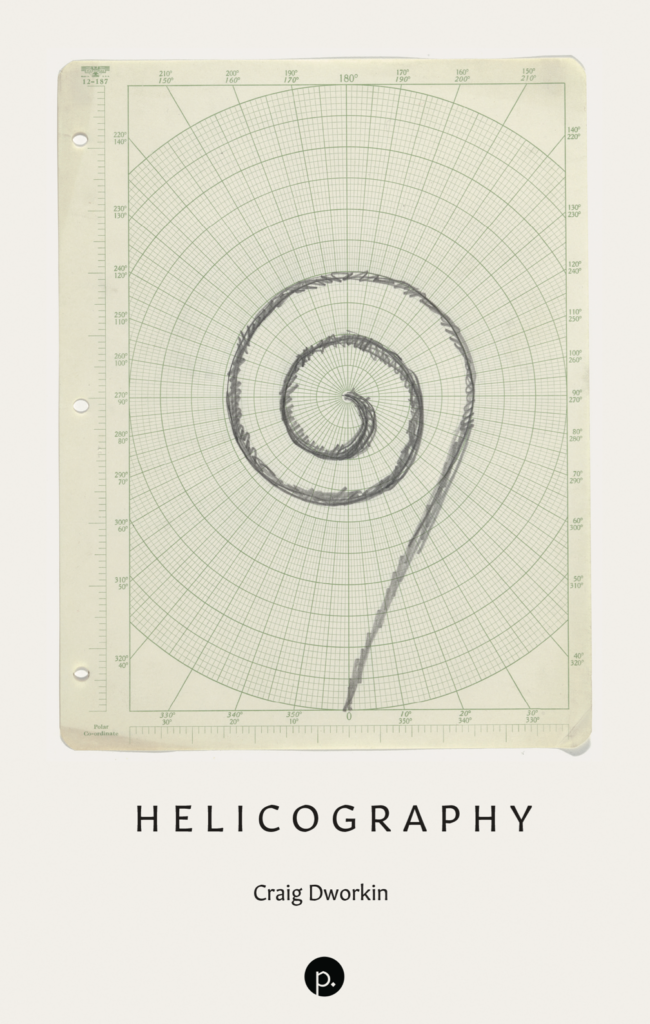
Helicography
<p>Part art history essay, part experimental fiction, part theoretical manifesto on the politics of equivalence, <em>Helicography</em> examines questions of scale in relation to Robert Smithson’s iconic 1970 artwork <em>Spiral Jetty.</em> In an essay and film made to accompany the earthwork, Smithson invites us to imagine the stone helix of his structure at various orders of magnitude, from microscopic molecules to entire galaxies.</p> <p>Taking up this invitation with an unrelenting and literal enthusiasm, <em>Helicography</em> pursues the implications of such transformations all the way to the limits of logic. If other spirals, from the natural to the man-made, were expanded or condensed to the size of <em>Spiral Jetty,</em> what are the consequences of their physical metamorphoses? What other equivalences follow in turn, and where do their surprising historical, cultural, and mechanical connections lead? This book considers a number of forms in order to find out: the fluid vortices of whirlpools, hurricanes, and galaxies; the delicate shells of snails and the threatening pose of rattlesnakes; prehistoric ferns and the turns of the inner ear; the monstrous jaws of ancient sharks; a baroque finial scroll on a bass viol; a 19th-century watch spring; phonograph discs and spooled film; the largest open-pit mine on the planet.</p> <p>The result is a narrative laboratory for the “science of imaginary solutions” proposed by Alfred Jarry (whose King Ubu also plays a central role in the story told here), a work of fictocriticism blurring form and content, and the story of a single instant in time lost in the deserts of the intermountain west.</p>
Authors: Craig Dworkin
Subject: Robert Smithson
Designer: Vincent W.J. van Gerven Oei
ISBN: 9781953035653